
Interviewed for Bonik Barta's Budget Expectations 2023-24 series, Sheikh Bashir Uddin, Managing Director of Akij Group, argued that jute's market potential will not be recovered by sentiment or subsidy but by research and innovation — and set out, sector by sector, what is currently in the way.
A Fifteen-Year Low
Jute prices, he said, had fallen to what he believed was their lowest level in fifteen years. He attributed the fall to several pressures at once: speculative stockpiling by inexperienced investors, weaker global demand, and the earthquake in Türkiye. Delayed incentive payments were compounding the effect by leaving mills short of liquidity. A withholding income tax on jute purchases, meanwhile, was not delivering the benefit intended of it, and would more likely raise costs for farmers and for production.
Where the Fibre Goes
Türkiye, once the largest market, had dropped sharply — its jute yarn imports roughly halving, in part because it had moved to recycled cotton as a substitute. India had become the biggest market, but an unstable one: anti-dumping duties are applied unevenly across Bangladeshi millers, and he called for them to be equalised and the policy reversed through diplomatic and economic effort. Exports to Africa had been hurt by geopolitical conditions.
The Numbers He Cited
- 01About 1.2 million tonnes of raw jute produced, on Akij's own survey
- 02Exports of raw jute and jute goods steady at 8 to 8.5 lakh tonnes over two years
- 03Local use of 2 to 2.5 lakh tonnes, mostly sacking — potato storage a major end use
- 04Türkiye's jute yarn imports roughly halved, recycled cotton taking the place
- 05Jute prices at their lowest in about fifteen years
Retting Is the Constraint
His proposals for a sustainable sector were practical rather than rhetorical: diversify into carpet backing and bags, cut energy use and waste, replace outdated machinery, and make retting environmentally sound — finding alternatives to water retting, which confines the crop to July through September. Alongside that, reduce the industry's dependence on Indian jute seed, secure the water supply the crop needs including the canals of Faridpur and Kurigram, and back the whole with government policy.
The sector, he said, has been driven more by emotion than by commercial logic, and the opportunities along its value chain have never been properly connected — a golden industry long neglected. Akij's own response has been to fund research: an agreement with the University of Dhaka, and investment in the microbiology of jute and in retting, with early results already in hand.
Janata-Sadat's Position
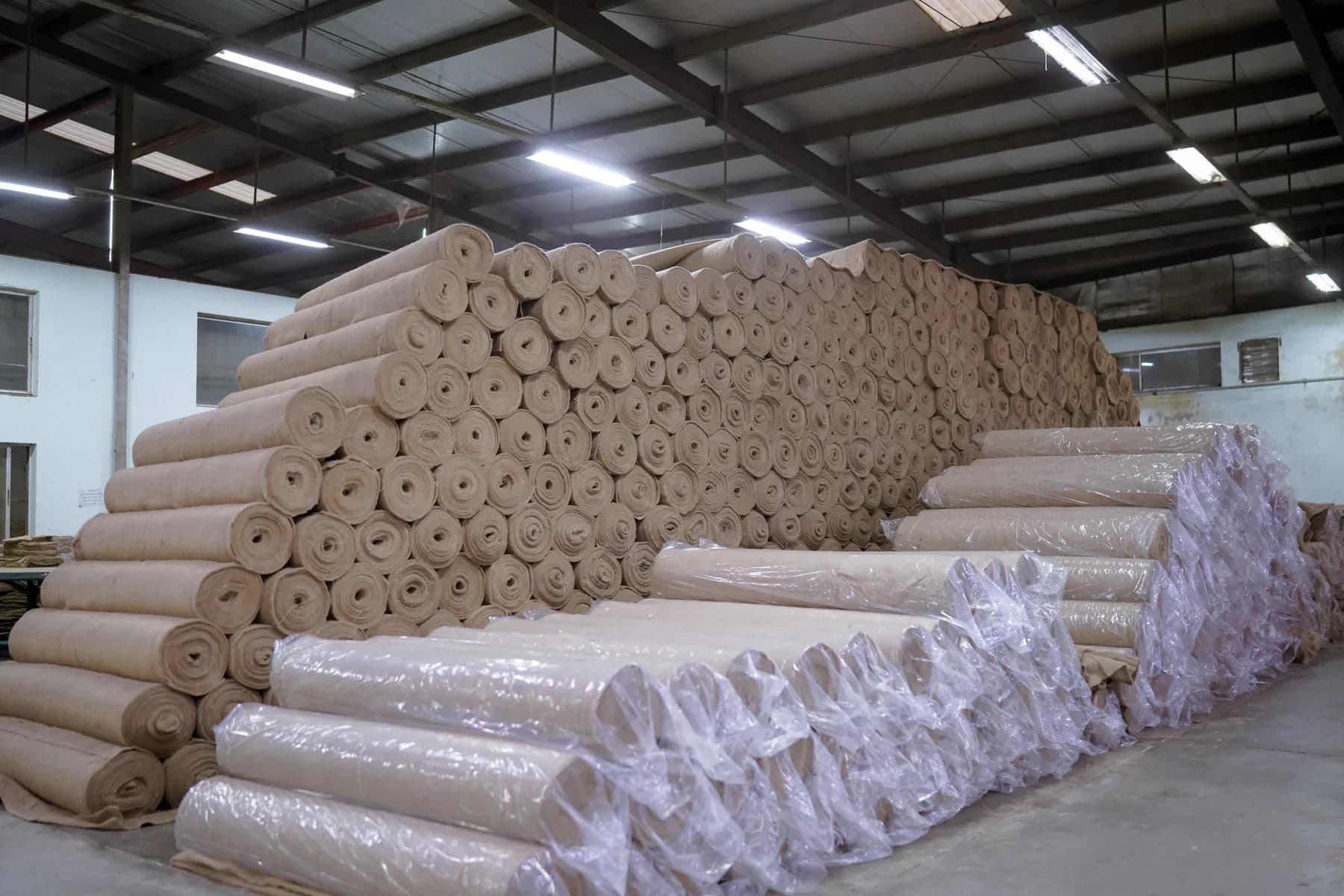
Of the mills under his ownership, he described Janata-Sadat as the only jute company posting positive growth that year — a daily capacity of 300 tonnes across yarn, sacking and hessian, and now the country's leading exporter of jute products.
Interview by Badrul Alam, published in Bonik Barta, 25 May 2023.